Grouping Recurring Agent Failures Into Actionable Issues
Organize agent failures by root cause, not symptoms, to enable durable fixes.
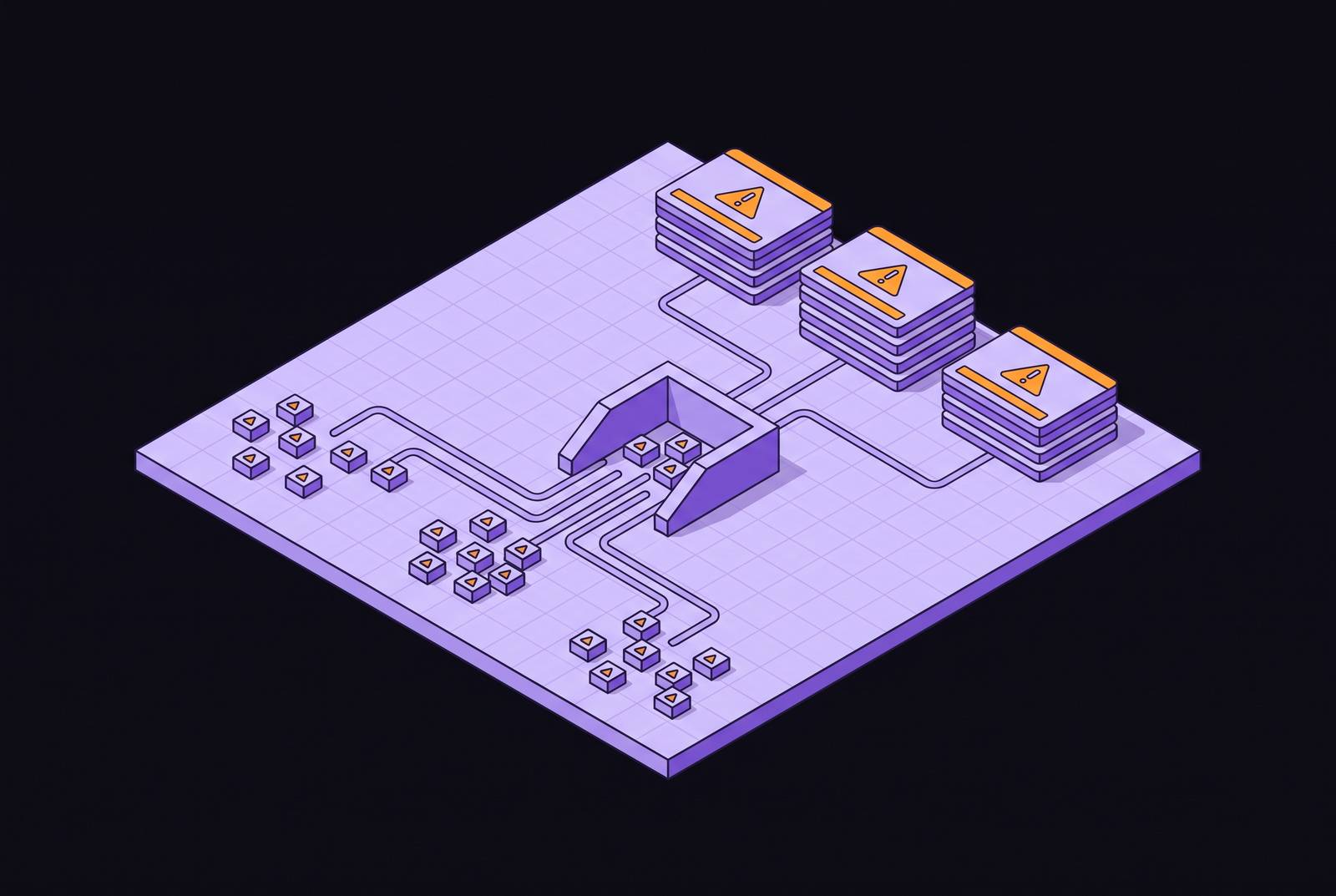
Traditional error monitoring fails for AI agents because a run that succeeds can still do the wrong thing. An agent can complete every tool call while giving users a semantically wrong result. Grouping recurring agent failures into actionable issues requires treating the failure category, rather than the individual trace or symptom, as the unit that connects production evidence to the right fix and a regression test.
Why individual traces cannot explain why an agent looks fine in logs but gives bad outputs
The trace pile grows with every multi-step run, while manual review becomes structurally impossible. Each span records part of an execution, but the collection does not explain which deviations share a cause. More records do not resolve that gap. Without categorization, engineers must repeatedly reconstruct the relationship between an agent’s actions and its intended task, even when earlier incidents already exposed the same kind of failure.
An inventory agent can invent a non-existent SKU and call four downstream APIs to price, stock, and ship it, generating no error signal that a trace alone would catch. Every call can report success while the workflow is wrong. The trace captures what happened, but identifying the deviation requires evaluating it against what the agent was supposed to do.
Traditional error monitoring can show which calls failed without showing whether the calls that succeeded worked toward the right goal. If the review process also lacks a shared failure vocabulary, the postmortem ends with a one-off prompt tweak, a vague “add a guardrail” action item, and a Slack thread. The next incident then forces engineers to work out the cause again.
How agent failures divide into five structural categories, each with its own fix surface
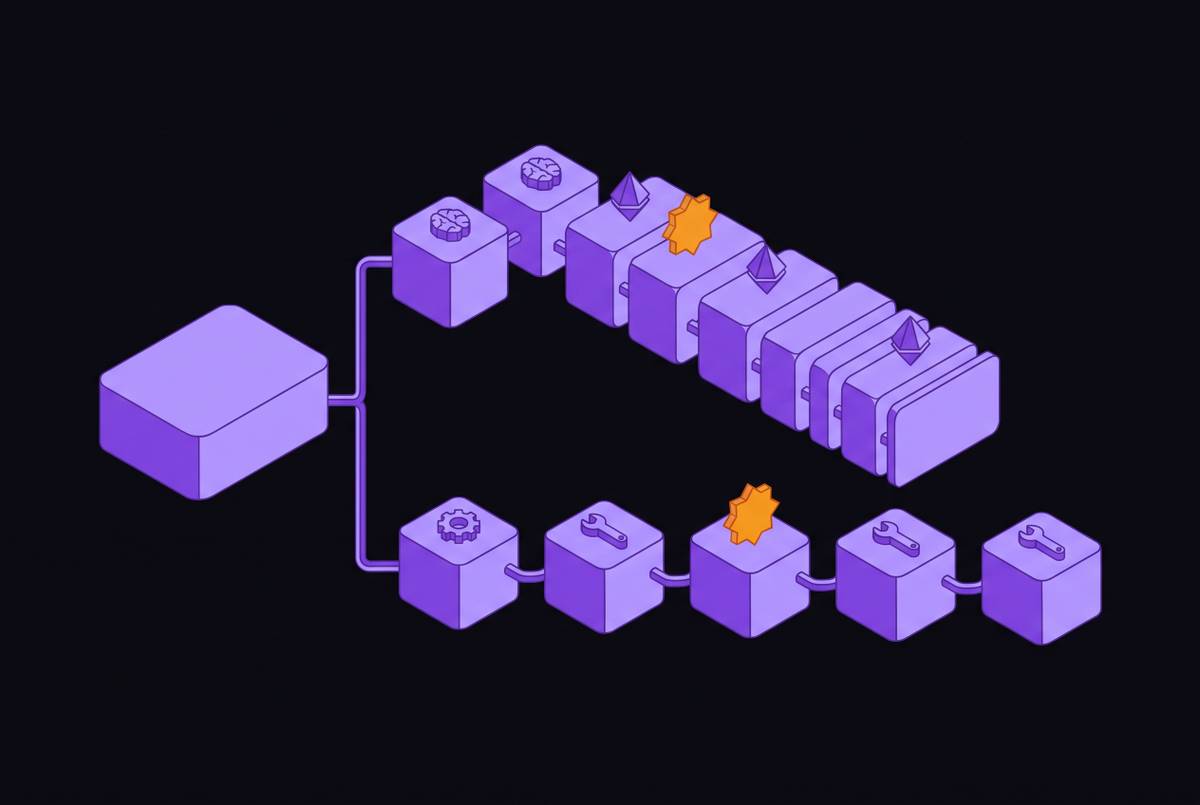
A useful grouping framework follows five natural surfaces in an agent’s span tree, namely plan, tool, retrieve, reason, and respond. These surfaces separate failures by where investigation and correction belong. Three buckets such as “input, model, output” collapse planning errors and tool errors together, while twelve or more categories can turn incident review into a labeling argument.
Planning errors appear as the wrong tool sequence, an infinite loop, a missing required step, or premature termination. Their fixes live in the planner prompt, a plan-vs-execute eval, and a cycle detector. The output scanner is downstream of that problem. By contrast, a tool error can occur within a correct plan when a call returns junk, receives wrong arguments, lacks a handled error path, or invokes a function absent from the runtime catalog. Its fix surface includes the tool allowlist, schema guard, retry policy, and MCP descriptor scan.
Retrieval provides a separate surface for examining the context available to the agent, rather than treating every wrong answer as a generation defect. Reasoning errors include factual errors, math errors, ignored instructions, and hallucination on grounded context. That last distinction is especially useful for routing. When the context is grounded but the reasoning fails, correction belongs in the generator rubric, judge, and calibration set.
The respond surface includes safety-and-policy violations that require a different corrective path from planning or reasoning errors. Depending on the subtype, the fix may involve an output scanner update, a refusal eval, or an adversarial pushback set. These are not interchangeable remedies for bad output. The framework therefore needs enough detail to locate the deviation without becoming an exhaustive taxonomy of every symptom. A planner-side problem addressed only at the output scanner still has its cause upstream.
Why the same failure category keeps recurring despite prior patches
Recurrence can show that the first patch addressed an example without turning the underlying category into a regression test. A later deploy can then reintroduce the same kind of deviation through a different execution. The original incident remains closed, but its lesson is not represented in the checks that govern the next release.
Because the execution produces no traditional error signal, it may never enter triage or receive a patch at all. The category accumulates unnoticed across otherwise successful traces. These two paths differ in whether anyone saw the earlier failure, but both leave the system without a durable check for that class of deviation. Naming the failure makes that check possible.
The Microsoft AI Red Team’s v2.0 taxonomy identifies novel adversarial and safety-related failure modes unique to agentic systems. Adversarial coverage alone, however, cannot cover silent, non-adversarial failures. Entropic failures occur without an attacker in the chain, so a monitoring approach limited to hostile inputs can miss deviations that arise under normal conditions.
The common requirement is a category that survives the incident. A cluster with a name can become a labeled dataset entry that the next PR must clear, whether the examples came from adversarial behavior or day-to-day use in production. Without that link, the review records a fix for one incident but leaves no check built from what the team learned. Two months later, the same symptom can return with no clear way to tell whether it represents a regression or a different failure mode. That ambiguity is a property of the monitoring process.
What grouping failures by category actually requires from trace data
Grouping by category is not grouping by symptom. A wrong final answer can come from a planning error, a faulty tool call, or a reasoning error on grounded context. Bundling those outcomes together erases the distinction needed to route the fix. The grouping mechanism therefore needs evidence about the path to the result.
Full execution context is the first prerequisite for that distinction. Span-level information must keep the decisions in a long trace and what each depended on, because an input/output pair cannot give teams the same basis for root cause analysis. The intended task must also remain available for evaluation. Outcome-oriented checks can establish that a result is bad while still leaving the location of the failure unresolved, which limits their value for assigning corrective work.
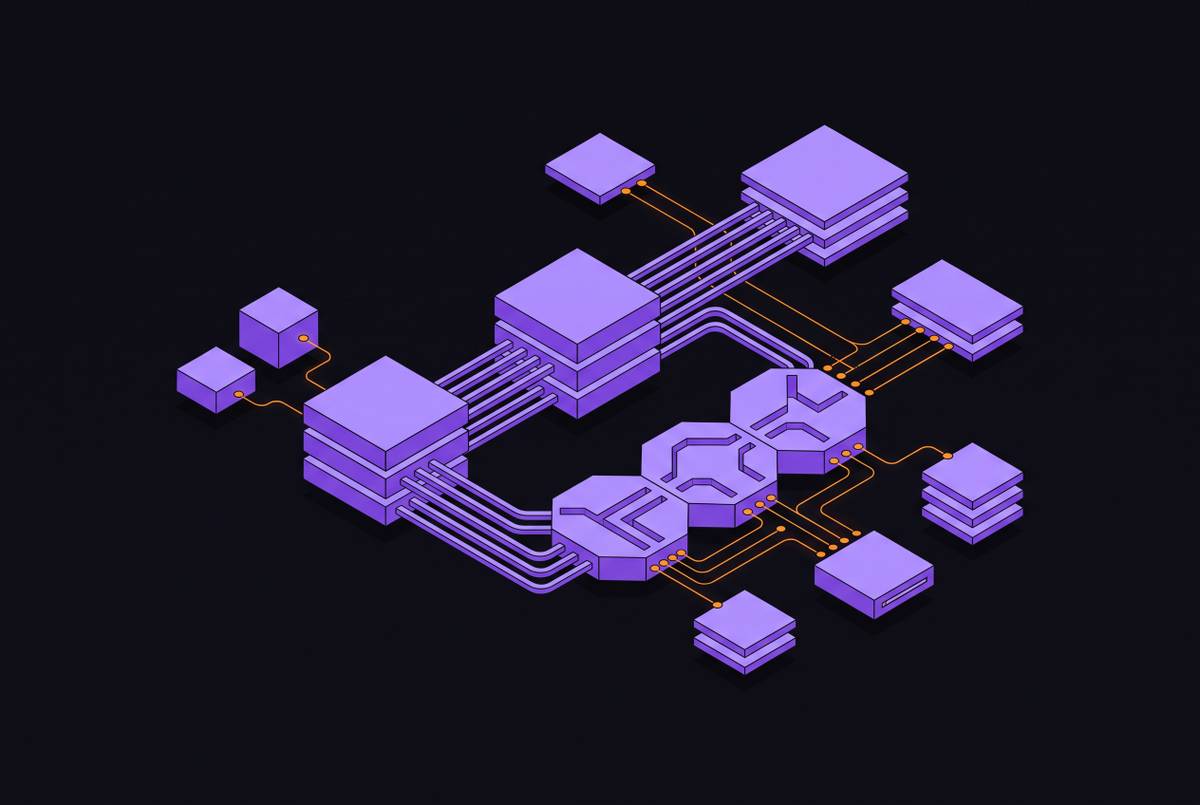
Five observability pillars support this richer view. Traces show the decision paths that led to final outputs, while metrics track cost, latency, and token consumption. Evaluations assess quality against the agent’s own instructions. Guardrails cover safety and PII, and business context supplies user tier and feature attribution. Together, these provide execution evidence, a standard for judging behavior, and context for understanding which part of the product a failure affects.
That evidence must support grouping without recreating the manual-review bottleneck. The mechanism needs to surface a failure category, a score, and an immediate fix direction automatically. Otherwise, engineers still have to read each trace before they can spot an issue that keeps coming back. Automation here turns the available context into a consistent diagnosis that can drive scoring, triage, and regression coverage.
The same taxonomy identifies MCP/Plugin Abuse as a distinct category involving poisoned tool descriptions and cross-server trust violations. These failures expose the risk of stripping away context. A tool-layer failure can look like a planning error when the evidence around the tool interaction is missing. Preserving that evidence allows grouping to distinguish the agent’s apparent behavior from the surface that caused it, which is precisely the distinction a useful issue must retain.
The three-stage loop that turns a grouped failure category into a closed regression
Stage one starts before deployment, with CI evals built from earlier incidents in production and grouped by category. These evals check the next release against examples of known failures. A curated set can prevent a known regression, but it cannot anticipate every user request or edge case that the production agent will encounter.
Stage two supplies continuous online scoring on production traces. Scorers run automatically according to trace classifications, extending evaluation to behavior the curated set did not predict. The category determines which scorer applies to an execution. Checking a plan, checking a tool interaction, and judging reasoning against grounded context are separate assessments.
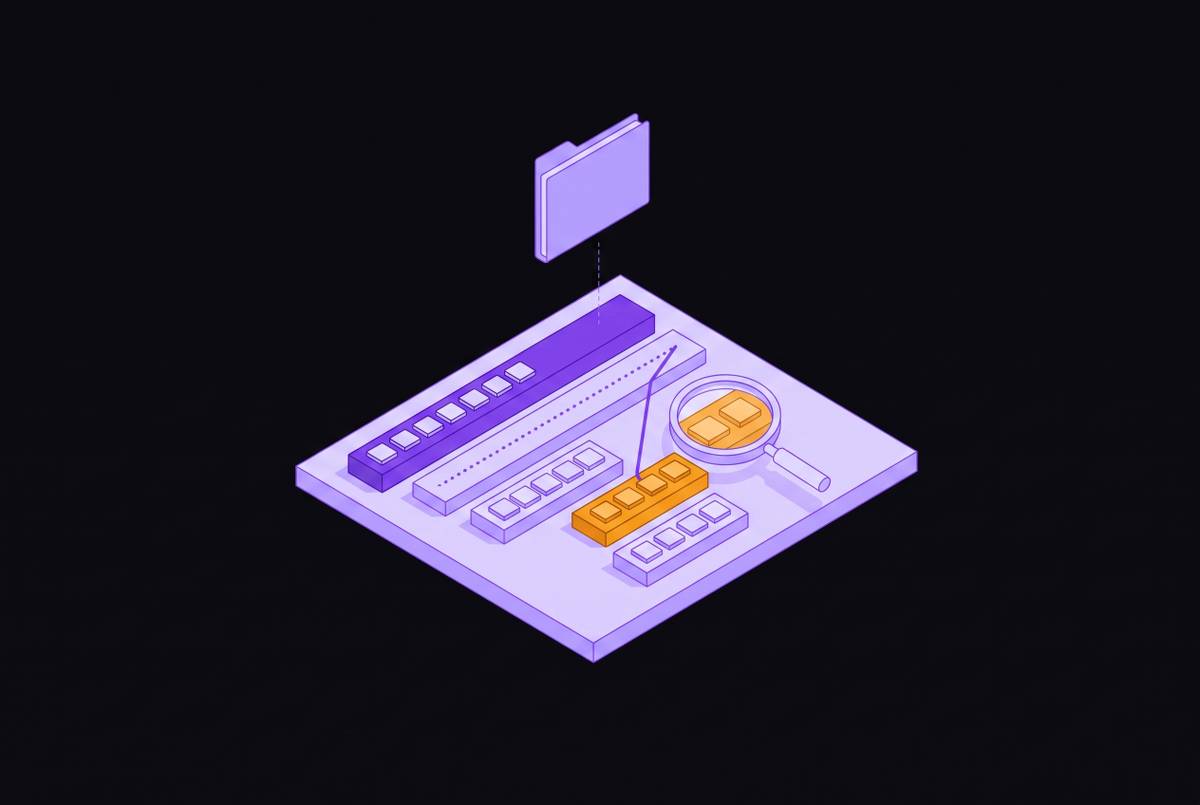
Stage three converts traces that fail an online scorer into eval cases for regression replay. The named subtype becomes the regression target. A cluster is no longer merely a set of similar records in a monitoring view, because its labeled examples now become part of what the next PR must clear.
All three stages need the same terms for their categories. The label selects the scorer during online evaluation and determines the eval bucket during replay. If those stages use incompatible definitions, the production finding cannot reliably become the pre-deploy check intended to catch its recurrence. The loop breaks at the handoff. Consistency therefore applies not just to the name displayed in an alert, but to what that name means in the evaluation suite.
This workflow gives a grouped issue an engineering endpoint. A category becomes actionable when the observed failure leads to a change on the relevant surface and an eval case for future releases. The test then records the behavior that must not return, rather than relying on someone to remember the incident during the next review.
Why the failure category, not the individual incident, is what routes a fix to the right team and surface
A planner-side patch belongs with the team that owns the system prompt. Write access is not a routing rule. Without a category, the available surface can become the default repair location, leaving the upstream deviation intact even when the immediate symptom disappears.
The same taxonomy’s expansion from 27 to 34 failure modes illustrates the operational consequences of granularity. Goal Hijacking and Inter-Agent Trust Escalation were subsumed under general agent compromise in v1.0. A broader label can therefore conceal differences that a response must address. The value of a more precise subtype lies in the corrective decision it enables.
Safety-and-policy violations make that distinction concrete at escalation time. A cluster in this category may require an output scanner update, a refusal eval, or an adversarial pushback set. Each of those three choices has its own owner and surface. The category establishes the relevant area of responsibility, while the subtype and trace evidence narrow the intervention. A generic alert about a bad response leaves that translation to the person receiving it.
A pre-routed issue instead arrives in the developer’s existing workflow with enough diagnosis to support a direct change. An alert stating “tool error, wrong-args subtype, in the payments tool” can lead to a code or config change without requiring the recipient to open a monitoring console and reconstruct the failure class. The issue identifies both the deviation and the surface on which the developer can act.
Traces are still essential evidence, and incident tickets still record what happened. Neither gives teams a lasting structure for deciding who does the work, what to test, and what to improve across deploys. That role belongs to the failure category. Teams that monitor by category can turn recurring deviations into owned fixes and regression coverage, while teams that monitor only by trace or incident remain dependent on another round of diagnosis when the symptom returns.