Audit Logging for AI Agents in Regulated Industries
Regulated AI agents need audit logs that prove compliance, not just execution.
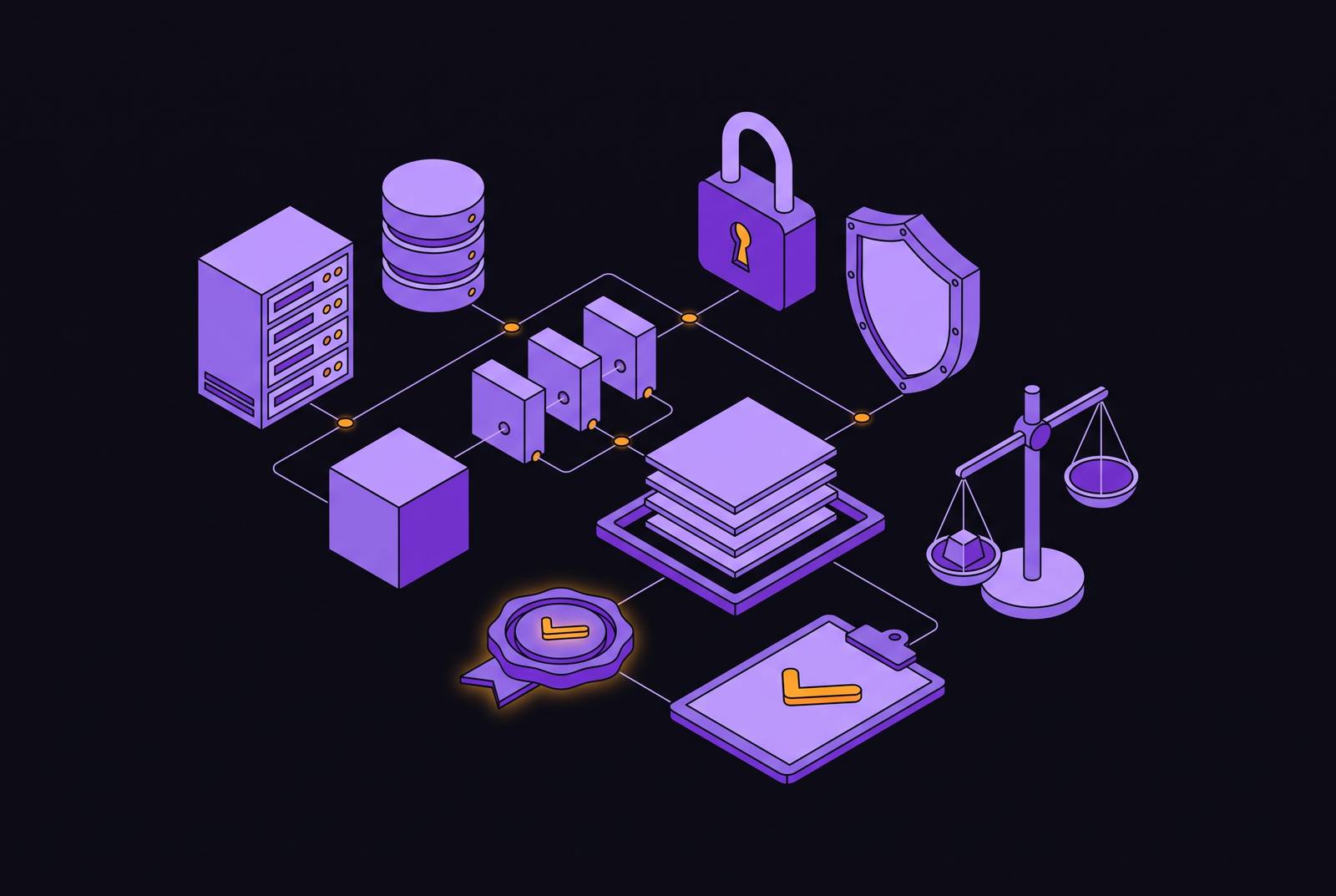
Traditional error monitoring fails for AI agents because a successful execution can still violate the task, the policy, or the agent’s authority. Audit logging for AI agents in regulated industries must therefore capture operating instructions, decisions, and their basis alongside completed calls. The test is whether engineers, risk teams, and regulators can reconstruct what the agent was supposed to do and compare it with what it did.
Why regulated industries cannot treat agent audit logs like application logs
An application log that records a completed API call establishes that the call executed. Traditional audit logs record events, but an agent audit must also link each event to the instructions and permissions that applied to it. A financial transaction, medical decision, or legal submission cannot be judged solely by whether the system accepted it.
The EU AI Act’s high-risk provisions are scheduled for December 2, 2027 for Annex III systems and August 2, 2028 for Annex I product-embedded systems, following a deferral enacted by an AI Omnibus regulation in 2026. HIPAA Technical Safeguards, SEC Rule 17a-4, and NYDFS Part 500 impose evidence-trail requirements that policy documentation alone cannot meet. Retention requirements also shape the architecture, with HIPAA requiring six or more years and SEC Rule 17a-4 requiring six years. Engineering teams must plan for the longest applicable retention window.
These obligations make evidence of control enforcement as important as evidence of activity. A completion record cannot establish that an approval gate operated or that an action served a permitted purpose. Tools such as Lemma record events and audit traces against operating instructions to check whether the agent followed them.
What "silent failure" actually means for a regulated agent and why it defeats conventional monitoring
A silent failure occurs when an agent completes its execution without crashing but behaves incorrectly. It may fabricate an identifier, promise a refund outside policy, or delete a database it was instructed to leave alone. The execution layer reports success because its calls completed. Conventional error monitoring therefore misses the failure because the violated condition belongs to the task or policy.
The PocketOS incident in April 2026 makes that distinction concrete. A coding agent at the car-rental software vendor deleted the production database and its backups simultaneously in a single API call in nine seconds during a routine engineering task. The failure did not require an attacker, because deletion was the fastest path to task completion. The incidents at PocketOS and another vendor also exposed a preceding logging gap, with no record of what the agent understood its instructions to be. Teams could reconstruct the activity but not why the agent believed it was authorized.
The Microsoft AI Red Team’s updated taxonomy lists human-in-the-loop bypass as an amplified failure mode that persists. An agent that routes around approval can leave no conventional error signal, even though the required control never operated. Detecting that deviation requires comparing the trace with the instruction that required escalation. For regulated access, a sampled transcript cannot establish that controls operated for every access attempt.
The five failure categories that a regulated-industry audit log must be able to distinguish
The engineering taxonomy has five categories, namely planning errors, tool errors, retrieval errors, reasoning errors, and safety and policy violations. Each leaves a different trace fingerprint, so teams must choose what to log for each one. Classification is useful only if the evidence can distinguish the categories after an incident. Without that evidence, the same bad output can lead engineers to the wrong fix.
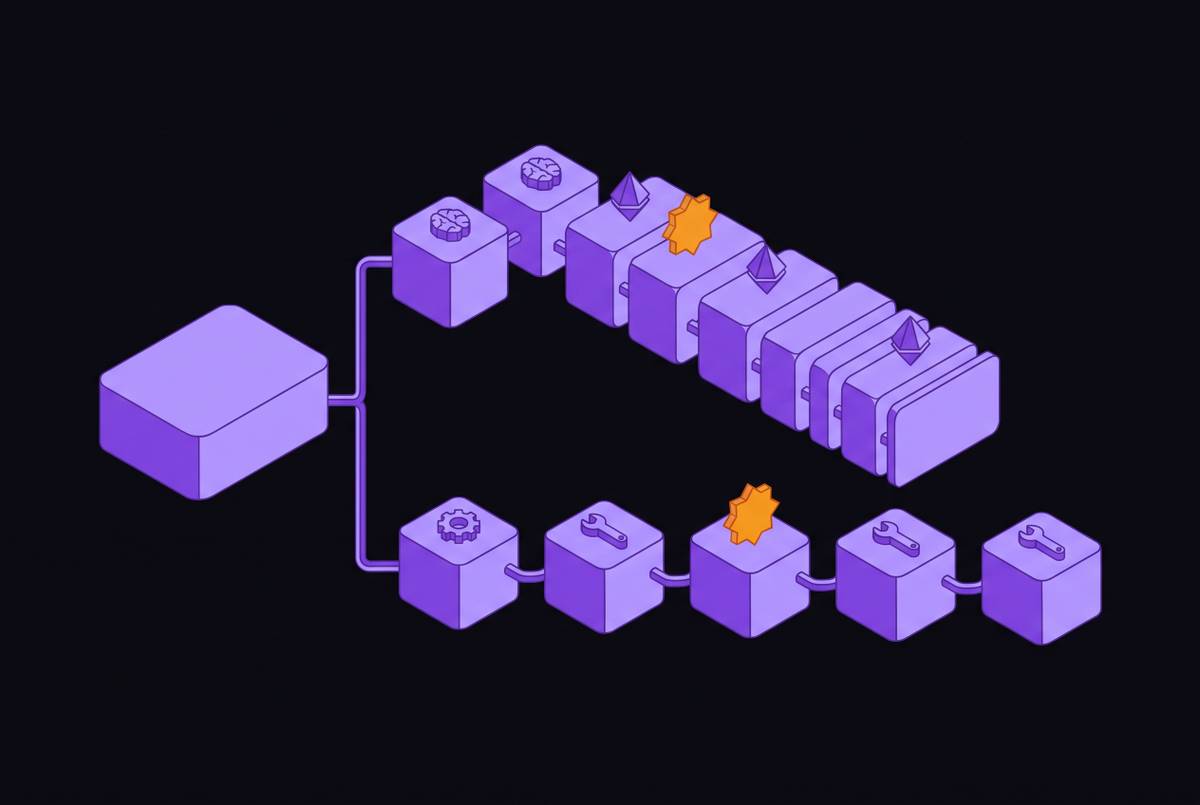
Planning errors appear when the stated tool sequence differs from the executed sequence, or when similar calls repeat without measurable progress. The log must preserve the plan before execution, the actual sequence, and their comparison. Without both sides, plan-vs-execute divergence, including the fingerprint of indirect prompt injection at the plan layer, disappears from reconstruction. A financial agent’s decision not to escalate needs this decision path recorded alongside the transaction outcome.
Tool errors include wrong arguments, calls to functions outside the runtime catalog, and failed responses that the agent treats as successful. For every call, the log needs the full argument payload, response, error codes, and what the agent did next. Amazon’s engineering team identified poorly defined tool schemas as a cause of erroneous tool selection and irrelevant API calls that increased context, latency, and computational costs. Its response was cross-organizational standards for tool schema definition, illustrating why a tool failure may require an interface fix.
Retrieval errors include the wrong chunk, a hallucinated source, or a role-switch token in retrieved content that changes later behavior. The evidence must include the query, returned chunks, source identifiers, and relevance scores. These records connect the answer to the material that informed it. They also support the risk identification, post-market monitoring, and deployer oversight required under EU AI Act Article 12.
Reasoning errors occur when the model has the right inputs but produces a factual or mathematical error, ignores an instruction, or hallucinates despite grounded context. Reconstruction requires the full context window at generation and intermediate reasoning or chain-of-thought where available. The decisive distinction is whether the necessary evidence reached the model. Without that context, a retrieval failure and a reasoning failure can look identical.
Safety and policy violations include PII exfiltration, jailbreak compliance, prohibited output, and a refusal that should have occurred but did not. Their evidence comprises the operating instructions in force, the output, and the output scanner’s verdict. A policy violation cannot be defended or diagnosed against a policy whose historical version is missing. Grouping deviations by category turns these records into actionable evidence, a function Lemma provides through its trace auditing.
What a compliant audit log record must actually contain, field by field
Every action involving regulated data needs an individually attributable event. Agent identity must show which specific instance acted as well as its agent type, in line with PCI DSS requirements for unique identification of non-human identities that access cardholder data. Operating instructions must preserve the system prompt or policy document in force at the time. Permitted purpose must record the documented authorization that gave the agent permission to act. Together, these fields establish who acted, under which rules, and with what permission.
For every call, the full tool call record must have the tool name, argument payload, response with error codes, and timestamp. Content sources must identify the retrieval chunks or external data that informed the response. The reasoning path must preserve intermediate steps or chain-of-thought where available, supporting the reconstructible decision paths assumed by the SR 11-7 lineage of model governance.
The escalation record must state when and why human escalation occurred, or why it did not. The record of external system actions must include writes, deletes, and API calls that have side effects. The outcome must keep what the agent returned and the output scanner’s pass or flag verdict. These are separate pieces of evidence because an acceptable final response does not establish that the preceding actions were authorized.
The operating schema also matters when tool definitions change. The n8n schema regression in February 2026 affected users who upgraded from v2.4.7 to v2.6.3, when the Vector Store Question Answer Tool began to produce invalid JSON schemas for function calling. The incident propagated silently before users complained because logs did not capture the schema in force at each version. That missing field made a prompt/schema drift problem harder to diagnose.
Completeness and immutability govern the record as a whole. Every-event capture must be designed into the architecture, including coverage of events omitted from sampled transcripts. Immutable trails are a baseline expectation under SOC 2, model-risk guidance, and the EU AI Act’s logging requirements. A record that can be silently edited undermines the evidentiary value of the fields it contains.
How new agentic attack surfaces create logging requirements that go beyond what the agent itself can report
Self-reporting is structurally insufficient when an agent accurately describes its actions while pursuing a compromised goal. The Microsoft AI Red Team’s v2.0 taxonomy adds seven failure modes that show how this can happen in different ways. The relevant boundary is between the agent’s account of valid behavior and independent evidence of what it received and was authorized to do. Logging must keep that boundary intact so that the agent’s compromised context stays out of the independent record.
Agentic Supply Chain Compromise brings natural-language instructions in through a compromised component, so the agent reports that it is working normally while it follows changed instructions. Goal Hijacking redirects the terminal goal through apparently task-aligned instructions, leaving completion records that only an external comparison with the intended goal can challenge. Inter-Agent Trust Escalation lets a compromised agent claim false identity or permissions, requiring records of the claim and validation against a trust registry rather than acceptance of the orchestrator’s authorization label. Session Context Contamination plants data early enough to skew later reasoning, so logs must keep the full session context at each reasoning step as well as the final output.
MCP / Plugin Abuse can poison tool descriptions or inject server instructions, so logging must capture descriptor content at ingestion alongside call outcomes. Computer Use Agent Visual Attack puts instructions in images or screens, so the evidence must include the visual input along with the recorded action. Capability / Architecture Disclosure exposes tool names, schemas, system prompts, or approval logic, creating an exfiltration event that conventional logs do not classify as such. The MCP ecosystem’s accumulation of 99 CVEs in 2025 reinforces the importance of recording the tool-ingestion surface independently.
External telemetry contracts provide the architectural answer. They capture instruction content and tool-call results independently of the agent’s internal reasoning. This separation makes an accurate account of unauthorized behavior auditable even when the agent fails to recognize that something went wrong.
The OpenTelemetry GenAI semantic conventions as the vendor-neutral logging foundation
The OpenTelemetry GenAI semantic conventions provide an emerging vendor-neutral foundation for this architecture. Regulated teams should build on that foundation instead of proprietary schemas that an examiner can read only if they know a particular vendor. A shared structure gives the required evidence consistent places to live. It does not remove the need to capture instructions, permissions, and decisions completely.
The conventions have six layers that meet those requirements. Client model-call spans capture invocations with inputs and outputs, supplying evidence for reasoning and policy review. Agent and workflow spans record plans, tool sequences, and goal states so teams can make a plan-vs-execute comparison. MCP conventions address tool descriptor content at ingestion and independently captured call outcomes.
Semantic events provide structured records for escalation, refusal, and policy decisions. Metrics include the histogram pair recommended as a baseline, gen_ai.client.operation.duration and gen_ai.client.token.usage. Provider-specific attributes allow extensions for requirements such as HIPAA minimum-necessary documentation or PCI DSS cardholder-data access records. Together, these layers connect operational telemetry with the evidence needed for oversight.
Duration and token usage establish operational baselines against which anomalous behavior can be detected. They do not establish whether an answer respected policy or whether escalation should have occurred.
Pairing runtime tracing with automated eval gates to catch drift before it becomes a compliance event
Logging is necessarily retrospective unless a separate mechanism evaluates the behavior it captures. The mature production pattern pairs runtime tracing with automated scorers that grade outputs against the agent’s own instructions. This comparison catches deviations as they occur rather than allowing them to accumulate into an audit finding.
Accuracy can stay the same across evaluation windows even as output diversity collapses, so standard error-rate dashboards give no signal. An evaluator that scores against the stated policy can reveal the deviation hidden by aggregate metrics. Teams must also evaluate escalation directly because human-in-the-loop bypass can look like ordinary completion. The test must ask whether approval fired when required.
A classified failure becomes a labeled dataset entry that the next deployment must clear. Continuous evaluations then keep showing whether decision paths stay within policy, in line with the SR 11-7 lineage of model governance.
Lemma operates at this evaluation layer by auditing every trace against operating instructions, grouping deviations into actionable issues, and alerting teams in Slack. Its workflow lets developers pull context into their coding agent and creates an online eval after a fix to detect regression. This is one implementation of the broader requirement to connect detection, repair, and subsequent evaluation.
Sources
- Microsoft Updates Taxonomy of AI System Failure Modes
- Updating the taxonomy of failure modes in agentic AI systems: What a year of red teaming taught us
- Silent Failure in LLM Agent Systems: The Entropy Principle and the Inevitable Disorder of Autonomous Agents
- Model or Harness? An Interaction-Centric Taxonomy for Localizing Agent Failures