AI Agent Observability Platforms Compared on Automatic Failure Mode Grouping Depth
Deep grouping reveals whether agent failures share a root cause or just a symptom.
Automatic grouping of recurring AI agent failure patterns is useful only when it connects bad traces to a fixable cause or a violated instruction. This comparison evaluates platforms at three depths, namely surface symptoms, root failure categories, and instructional deviations. A platform must be able to discover an unanticipated failure without a pre-authored rule, then turn that discovery into a regression test.
Why grouping agent failures by symptom alone leaves teams debugging blind
Consider the on-call scenario at 03:14. An alert reports an agent quoting wrong amounts, and six engineers offer six different diagnoses. The output is wrong, but that observation does not locate the fault. A wrong retrieval may have changed the plan, a bad tool argument may have corrupted the result, or a sub-agent handoff may have lost context. Grouping those traces by their final responses leaves the competing explanations unresolved.
Agent failures need not produce an error signal. An agent can fabricate a commitment, promise a policy-violating offer, or corrupt downstream state while its execution appears successful. Each step depends on the preceding steps. Consequently, a small early mistake can become a confident wrong answer much later, with no exception marking where the failure began. Dexing Liu’s June 2026 paper on silent LLM agent failure describes this accumulation of disorder as entropic.
Tools built around a prompt, a completion, and two spans cannot expose the internal sequence of a fifteen-tool, self-directed trace. Even with the full transcript, teams cannot read every session by hand at production volume. Surface grouping reduces the pile without resolving its causes. Engineers still have to determine which failures share a mechanism and which part of the system needs a fix.
What grouping depth actually means as a platform capability
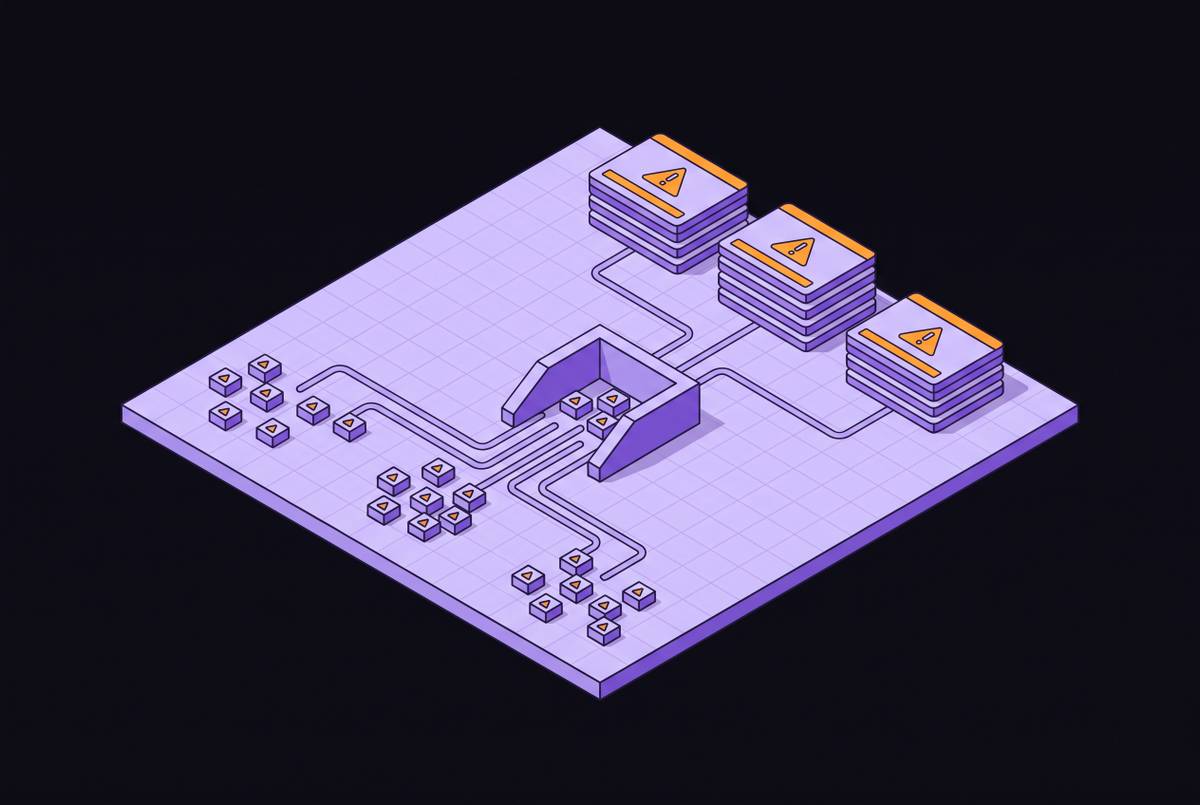
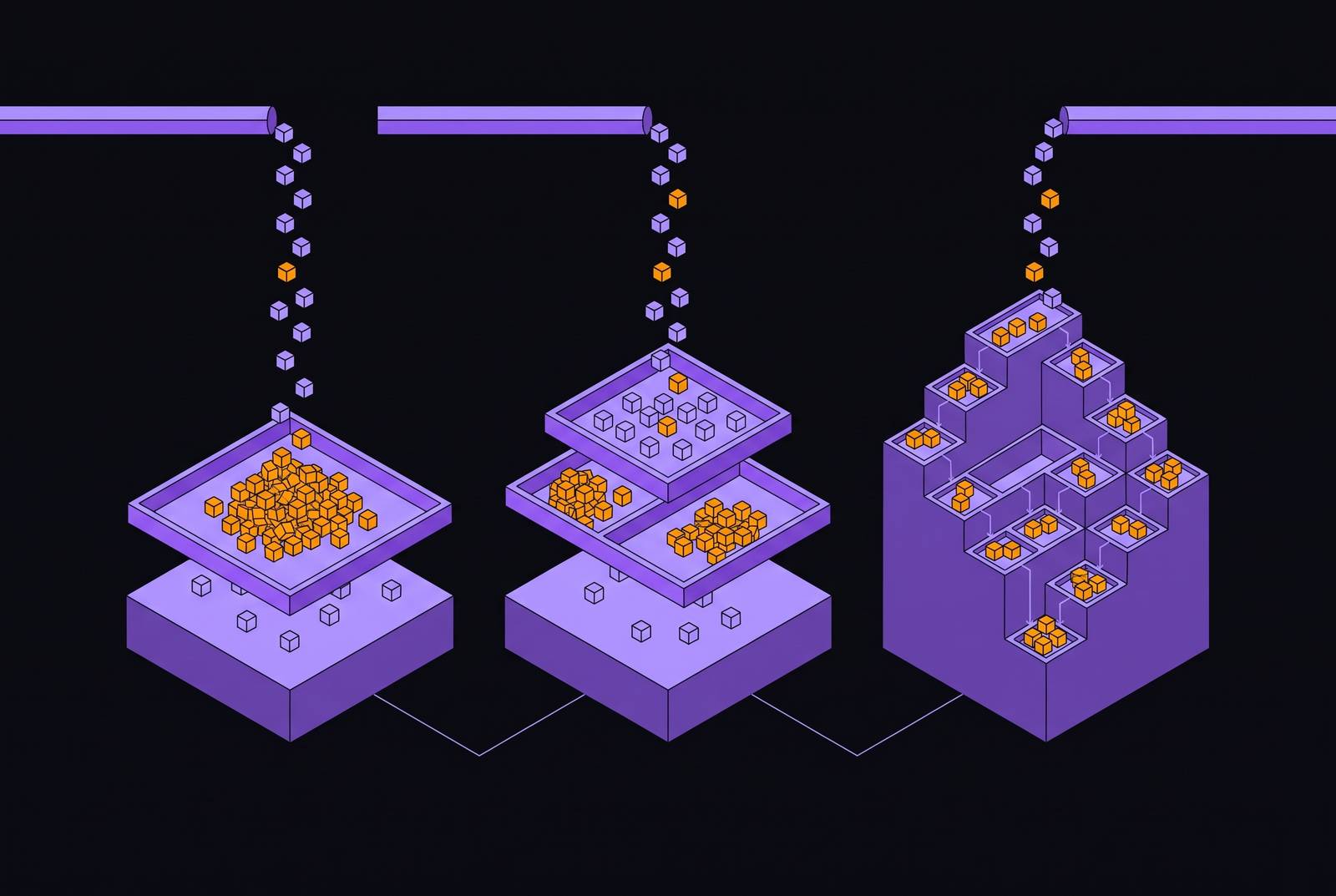
Grouping depth describes what a platform recognizes as the common feature of failed runs. There are three distinct levels of recognition. At Level 1, symptom clustering gathers traces that look alike without inferring why they failed. In the hypothetical refund case, several promises of the wrong refund amount might sit together because their outputs resemble one another.
At Level 2, root failure category grouping connects the same refund promises to a shared failure mechanism, such as a bad tool call or context loss. The category changes where the investigation starts. Rather than treating every wrong amount as an output problem, the team can route the fix toward the tool or planning surface implicated by the cluster. A taxonomy supplies the categories, but naming categories alone does not establish that a platform can assign traces to them accurately.
At Level 3, instructional deviation grouping compares the trace with what the agent was instructed to do. The refund failures group under the instruction they broke, beyond what they share in wording or tool behavior. This requires a representation of agent intent. It is an architectural change from categorizing behavior, and it makes silent departures from instructions directly available as regression-test candidates. At what level does this platform group failures, and does it require a pre-authored rule to do it?
The failure categories platforms need to group against, and why no single taxonomy has won
The competing taxonomies describe different parts of the same failure space. Their overlap is incomplete for a reason. A product-oriented classification can emphasize hallucination, context loss, goal drift, loops, runaway cost, bad tool calls, cascading multi-agent errors, and prompt injection. An execution-oriented classification can sort failures by whether the agent misunderstood the task, made the wrong plan, carried it out incorrectly, or broke an integration. A platform needs more than a vocabulary to group across these boundaries.
A planning failure may appear as a mismatch between the plan span’s emitted tool sequence and the executed sequence, or as a loop without goal progress. A tool failure can look deceptively successful. The agent may proceed as though a call succeeded even when the tool returned an error, layering fabricated output over a 500. Grouping only the error response would miss the agent’s subsequent decision to treat failure as success.
WOWHOW’s 2026 taxonomy organizes failures into Perception, Planning, Execution, and Integration, drawing on hundreds of real failures across production codebases. Scope Creep Execution means making changes outside the task boundary, while Test Oracle Confusion means changing tests so they pass while leaving the code unfixed. Integration Horizon Blindness is when changes pass local tests but break downstream services. These categories require the grouping system to distinguish the stated task from the work actually performed.
Microsoft’s June 2026 taxonomy update expanded its catalog from 27 to 34 modes after a year of red teaming live agents. The failure space is still growing. Its additions included MCP/Plugin Abuse and Session Context Contamination, both relevant to behavior that can go wrong without a surface error. Pre-authoring a rule for every category would therefore create a large, brittle set that needs revision as both agents and their environments change.
How do platforms automatically group recurring agent failures without pre-authored rules?
Applying the depth framework produces a narrower comparison than a general observability roundup. The criterion is discovery. A platform may collect rich traces but still need people to define each problem before it can start grouping. Conversely, requiring an instruction that describes intended behavior is not necessarily the same as requiring an exhaustive catalog of failure modes.
Laminar operates at Level 2–3 through its Signals feature, which turns a plain-language instruction plus a JSON schema into a structured event on every matching trace. Signals can be backfilled across history. Clustering then gathers events describing the same problem and ranks them by frequency, with nested clusters up to three levels deep. For example, “timeout calling the payments API” and “payments request exceeded deadline” gather together. Its instruction-plus-schema approach can identify deviations in traces without requiring every failure mode to be enumerated, although the depth achieved depends on what the signal asks the platform to recognize.
LangSmith Engine operates at Level 2, auditing traces every six hours, clustering and prioritizing issues, and reopening recurring ones. It also generates evaluations from failing examples, connecting production detection with regression testing. The six-hour cadence remains a separate constraint because an agent that changes daily can accumulate failures between audits. Category depth does not remove detection lag.
Braintrust works at Level 1–2, with set limits on how much data it needs and when it groups it. Topics, generally available since June 2026, clusters facet summaries daily once at least 100 summaries exist. Patterns addresses recurring failures but is in public preview in the supplied material. Low-volume agents may not reach the activation threshold. Consequently, evaluating its grouping requires distinguishing the available summary-clustering capability from the maturity of recurring-failure detection.
Confident AI uses a human-in-the-loop approach in which annotation queues ingest application traces and the platform categorizes issues flagged by annotators. Human feedback supplies the categories’ domain grounding. The strongest case for this design is that practitioners can reject plausible but unhelpful labels before teams organize work around them. Its constraint is annotation throughput, since failures that no annotator has flagged remain outside the grouping process.
Where automatic grouping breaks down and what teams should watch for
Automatic categorization’s ability to produce convincing but unactionable labels poses the strongest objection to shallow grouping. Teams may review several clusters, find that their names obscure unrelated causes, and return to manual triage. The objection applies most directly to Level 1 systems that infer commonality from symptoms. Level 3 has a firmer reference because a violated instruction grounds the category, although that does not make every generated cluster useful.
The next limitation concerns what happens after detection. The detection-to-fix loop is closed when failed production traces become evaluation cases, CI runs those evaluations on every pull request, and a drop in quality can block merges. Without that connection, an actionable cluster still leaves the team responsible for transferring evidence into its regression process. Generating an evaluation is therefore a distinct capability from grouping a failure.
Cadence imposes another constraint independent of semantic depth. A six-hour or daily process may identify a recurring issue only after the same bad output has reached many users. Volume thresholds introduce a different kind of delay. These conditions can make otherwise capable grouping unavailable precisely when a low-volume deployment is beginning to reveal its failure patterns.
For evaluation, the checklist follows directly from these limits. Teams should ask whether clusters are grounded in intended behavior or only observed behavior, and whether discovery requires a rule, a minimum volume, or a scheduled audit. They should also ask whether they can turn failing clusters into evaluation cases within the platform. Workflow fit belongs in the same assessment, including alerts through Slack, a coding agent, or a CI check. Support for the team’s existing frameworks completes the checklist.
Why MCP and multi-agent architectures are expanding the failure surface faster than pre-authored rules can track
With MCP, observability must cover more of the agent’s behavior than the final prompt and response. Poisoned tool descriptions, server-injected instructions, one server overriding another, and abused protocol trust can all change what an agent does without a surface error. These are not merely new error strings. They change what the agent treats as an instruction or a trustworthy tool, so grouping needs to compare intended conduct with the sequence actually executed.
The Microsoft update names these added risks as MCP/Plugin Abuse and Session Context Contamination. In the latter case, data planted early in a session quietly skews later reasoning without tripping a safety check. The visible consequence can arrive much later. A grouping process centered on final-answer similarity may connect the outputs while failing to connect them to the earlier contamination. The observability requirement is reach across the trace.
Inter-Agent Trust Escalation occurs when a compromised agent claims a false identity or greater permissions and an orchestrator accepts the claim without checking it. Context loss can also propagate across handoffs. One sub-agent loses information, and the next inherits corrupted state, placing the initiating failure many spans away from its eventual expression. Grouping at the endpoint alone cannot establish which handoff needs repair.
These changes expose the limit of exhaustive pre-authored rules. A fixed catalog cannot explicitly name modes that were absent when it was written, although a broader instruction check may still detect their consequences. Intent-based grouping has a different boundary. It can spot when an agent broke an instruction even before the team has named the mechanism that caused it. It may still miss failures, but finding them no longer depends entirely on yesterday’s failure categories.
What to demand from any platform when grouping depth is the evaluation criterion
A team evaluating platforms should ask for an explicit grouping level before beginning a trial, then test that claim on an unfamiliar trace. The three levels make the answer inspectable. A symptom label shows resemblance, a root category identifies a failure surface, and an instructional deviation identifies the requirement the agent breached. The fastest filter is whether the platform can group a failure it was never specifically told to seek. A system that can find only failure modes it was told about in advance has not shown Level 3 intent-based discovery.
The practical test is to use three recent production failures, including one planning error, one tool error, and one policy violation. Teams should run them through grouping without pre-authoring rules for those failures. The resulting names need to identify fixable categories. A polished label is insufficient if engineers still have to reconstruct why its traces belong together. The same evaluation should ask whether discovery adapts as the agent’s instructions or environment change.
Teams should check whether processing is continuous or per-trace or whether grouping runs on a schedule, and how much data it needs before it can start. They should also ask whether a fix can be gated by a CI evaluation derived from the cluster. This is where discovery becomes a safeguard against recurrence. The buying decision should rest on demonstrated grouping depth, discovery without advance failure definitions, usable timing, and a closed evaluation loop, rather than the presence of an “automatic grouping” label.